No.1 Roc Sign
Pyramid, Eye in Pyramid, Diamond, Triangle, Eye in Triangle, Sign for the Grade of Fire, Triangle of Manifestation
The Roc Sign is made by holding out your palms while touching both your thumbs and index fingers forming a triangle.
The pyramid is an important Illuminati symbol showing their few
ruling the many on the bottom type power structure. The symbol becomes
more powerful when the sign is done over an eye, representing the
All-Seeing eye in a capstone floating over an unfinished pyramid.
The pyramid sign is seen by many researchers to be THE sign of the Illuminati.
Celebrity hip-hop artist Jay-Z made the sign famous by using it as a
sign for his record labels Roc-A-Fella, Def Jam and Roc Nation.
Jay-Z told the history of the Roc Sign gesture on BBC Radio’s Live Lounge.
He and other employees at Roc-A-Fella Records began doing the sign to
each other in their hallways telling themselves that newly- signed
Christión single “Full of Smoke” would go Diamond. (5 million copies
sold)
Jay Z soon began to use the sign as a semaphore for Roc-A-Fella Records, and later Roc Nation.
Celebrities doing the Roc sign:

Tom Cruise

Ben Stiller

Al Sharpton

Warren Buffett

Denzel Washington

Christina Aguilera

Drake

Victor Cruz

Kanye West

LeBron James

Rihanna

Beyoncé
other uses of the Roc sign:
Jay Z’s use of the hand gesture prompted pro wrestler Diamond Dallas Page to sue Jay Z
for infringing on his intellectual property because Page had used the
symbol to indicate his signature move, the Diamond Cutter. (A move
derived from Johnny Ace’s Ace Crusher.) Jay Z settled the claim for an
undisclosed sum.
The sign has been used previously in many different contexts. In Aleister Crowley’s A.’.A.’., the gesture is the sign for the grade of fire. Wiccans know the symbol as the Triangle of Manifestation.
In the Jewish tradition it was used as the Priestly Blessing of Kohen. Star Trek’s Spock’s Vulcan salute was itself based on this Kohen blessing sign. In Ninja Kuji in magic it is the Kai (在), one of the 9 primary hand symbols used to channel energy.

One of the 9 primary signs of the Ninja Kujiin

Dora making a triangle

Feminist Gloria Steinem

Diamond Sign Dallas Page

Hebrew high priests throwing a Roc

Sign for Toblerone’s triangular shape or shout out to Illuminati?
Merkel-Raute
The sign is also done in reverse. Current Chancellor of Germany Angela Merkel uses the “Merkel-Raute” as her trademarked sign.

Angela Merkel

Morpheus

Pope John Paul 2

Adolph Hitler
No.2 Triple 6
666. 666 hand sign, Six Six Six, Circle Eye, OK Sign, Okay
The sign is made by touching your thumb with
your index finger making a circle. The other fingers follow the index’s
shape thus forming the tail of two 6s.
“Let him who has understanding calculate the number of the beast, for it is the number of a man: His number is 666.”
~ Revelation 13: 18
New King James Version (NKJV)
The sign is given as a pledge of allegiance to Satan. When it is given over the eye, it represents the eye of Lucifer.

Justin Bieber

Tyra Banks

Emma Watson

Justin Timberlake

Michael Jackson

Bill Clinton

Drake

Lady Gaga
No.3 El Diablo
The Devil’s Horns, El Diablo, Diabolicus, Il Cornuto, Sign of the Horns…Illuminati Symbol
The Hook ’em Horns is the sign for the University of Texas of Austin.
According to Illuminati symbolism researcher Texe Marrs in Codex Magica (Read it here, buy it here),
Helen Keller herself was an occultist and in the Illuminati’s tradition
of hiding symbols in plain sight and keeping the symbols real meaning
to Illuminati initiates chose the sign of Satan as the deaf sign for I
love You.
According to Illuminati researcher Fritz Springmeier, the sign of the
horns is a hypnotic induction which triggers certain programming in Monarch mind-controlled slaves.

Bill Clinton

Prince William

Michael Jackson

Barrack Obama

Hillary Clinton

Ronald Reagan

Rihanna

Quentin Tarantino
No.4 Hidden Eye
All-Seeing Eye, Eye of Lucifer, Hidden Eye of Lucifer, Eye of Horus
The sign is made by covering the other eye
with the other hand with only one eye remaining visible.The sign
represents the evil eye floating above the pyramid. The single eye, or
the eye of Providence originates in Egypt with the eye of Horus. In
conspiracy theory lore, it represents allegiance to Satan and the
Illuminati.

Bono

Lady Gaga

Ke$ha

Aldous Huxley

Nicki Minaj

Michael Jackson

Miley Cyrus

Eminem
No.5 Masonic Handshakes
The Lion’s paw and other Freemasonic Handshakes
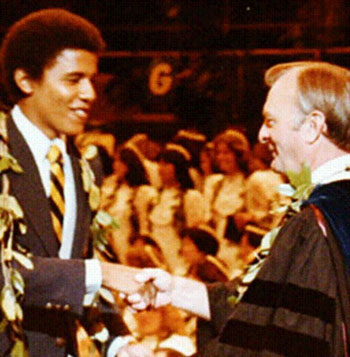
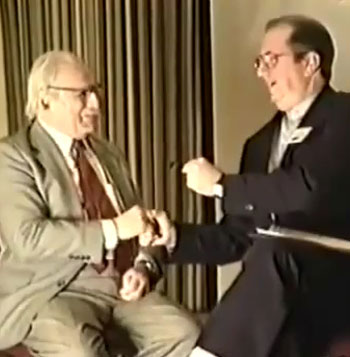
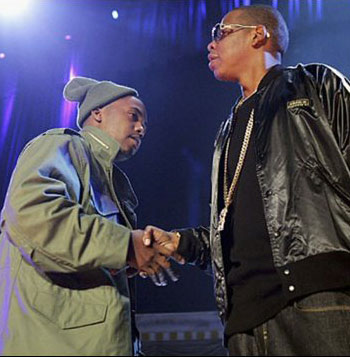
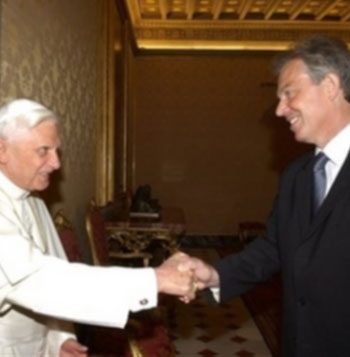
That’s A LOT of Masonic handshakes.
It is also incredibly difficult to determine whether are not the
people doing the handshake intended it to be a Masonic handshake.
There are hundreds of variations of everyday handshakes which depend
on a variety of factors including a person’s height, distance from
shaker and even whether or not a person is in a hurry or not. Handshakes
also vary depending on how familiar greeters are with each other.
Here are some of the more famous alleged Masonic handshake:
See world leading politicians, business leaders and celebs allegedly doing Masonic handshakes on Youtube here and here.
No.6 Nazi Salute
Hitler Salute, Bellamy salute, Roman salute, Sign of Zelator
The Bellamy Salute
traditionally accompanying the Pledge of Allegiance was changed in
December 1942 as it became more and more associated with the infamous
Nazi Regime. The Olympic salute which is also similar to the Nazi salute
has always generated controversy whenever it is.
Links to the Illuminati: The Nazi Salute based on
the ancient “Roman” salute was adopted by the Nazis in the 1930s. Hitler
was a creation of Illuminati bankers. General Electric, General Motors,
DuPont, Ford and Standard Oil were eager to go to war and reap in the
benefits. American branches of the Illuminati bankrolled World War 2 and
kept feeding Hitler’s war machine until the very end of the war.
Links to the Bavarian Illuminati: No. None of the grips and recognition signal used by the Illuminati resembled the Nazi salute.
Links to Freemasonry: None. Hitler banned freemasonry in Germany because in his beliefs in the Elders of Zion and the Judeo-Masonic Conspiracy.
Logo for the CFR’s Foreign Affairs magazine
No.7 Hidden Hand
Hidden Hand of the Men of Jahbuhlun (Jahbulon, Jabulon), Sign of the Master of the Second Veil
Texe Marrs calls this sign the Hidden Hand of
the Men of Jahbulon in his Codex Magica. According to Marrs, it
represents the hidden Masonic deity, Jahbulon. The sign’s true meaning
must remain hidden from the public.
Jahbuhlun = Jah-buh-lun = Yah-Baal-On =
Yahweh-Baal-Osiris = The true god of Masonry
~ Codex Magica

George Washington

Karl Marx

Friedrich Nietzsche

Baron von Knigge

Sign of the Master of the Second Veil (Royal Arch Mason – York Rite)

Frédéric Bartholdi

Joseph Stalin

Napoleon


.jpg)