According to the census of June 16, 1933, the Jewish population of Germany, including the Saar region (which at that time was still under the administration of the League of Nations), was approximately 505,000 people out of a total population of 67 million, or somewhat less than 0.75 percent. That number represented a reduction from the estimated 523,000 Jews living in Germany in January 1933; the decrease was due in part to emigration following the Nazi takeover in January. (An estimated 37,000 Jews emigrated from Germany during 1933)
So there were only half a million Jews in Germany – where did six million figure come from?


The Holocaust As Convenient UnHistory
By Brother Nathanael Kapner, www.realjewnews.comCOUNTLESS ALLIED WAR CRIMES have been sequestered under the cover of the so-called ‘Holocaust’ which was allegedly perpetrated by National Socialist Germany.
In a global quest to ‘rescue European Jewry’ more than half a million German civilians were killed in Allied bombings of German towns and cities alone, with at least 200,000 them literally “holocausted” in flames and fire storms in Dresden.
(The Jewish-dictated ‘court historians” of the Jewish-created ‘Bundesrepublik Deutschland’ have fixed the Dresden civilian deaths at 25,000. Those who dare question the ‘Jewish’ count are faced with imprisonment and huge fines.)
Moreover, at least nine million Germans died as a result of deliberate Allied policies in post WWII Germany of starvation as well as expulsion from former German-held territories.
And 1.7 million German prisoners of war died of torture and brutality in Eisenhower’s Death Camps. View Allied War Crimes Here & Here.
American Jewry, the architects of Roosevelt’s entry into WW II, which under the direction of the Jew, Henry Morgenthau Jr, formulated and advanced the idea of “collective punishment” against both German civilians and their leaders. View Entire Story Here & Here.
It was James Forrestal, former US Secretary of Defense, who in his diary of December 27 1945, noted that during a game of golf, Joseph Kennedy, FDR’s ambassador to Britain, toldhim that British prime minister Neville Chamberlain stated that “world Jewry forced England into war.” View Entire Story Here & Here.
And Jewry itself best recognizes why America entered WW II.
The American Hebrew on July 24 1942 declared that “whenever an American falls where MacArthur’s men fought the survivors can say: the reason that boy went to his death is because Hitler’s anti-Semitic movement succeeded in Germany.” View Entire Story Here & Here.
WHEN THE ALLIES ‘liberated’ National Socialist prison camps, a whole new arena of propaganda emerged that World Jewry seized upon and exploited in the press.
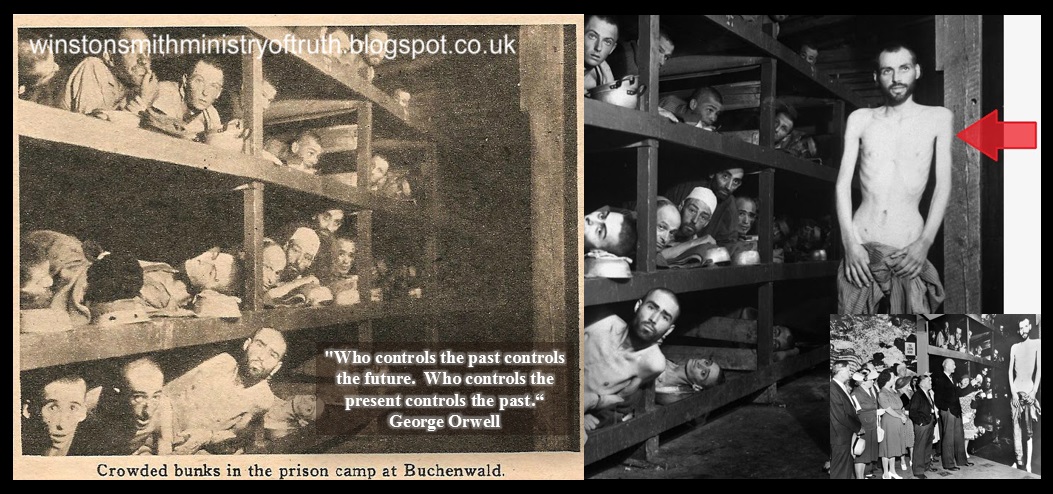
The Jewish propaganda machine spun into action when the Jewish-owned New York Timespublished on May 6 1945, the photo, “Crowded Bunks In The Prison Camp At Buchenwald.”
The apparent intent was to elicit sympathy for Jews rather than (by omission) engendering compassion for the millions of German civilians who lost their lives due to Allied war crimes.
Indeed, the New York Times laid the groundwork for Jewry’s propagandizing agenda, when five months before publishing the Buchenwald photo, they ran a story headlined: “6,000,000 Jews Dead In Europe.” And this appeared long before anyone could have known the number.
Soon, World Jewry had a weapon to advance and protect their fabricated story: control of the mass media and the newest and most thought-controlling media of all — television.
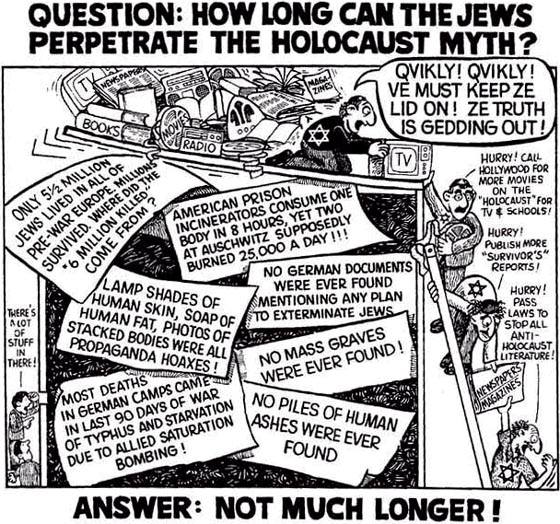
FROM THEN ON, the Western World has been inundated with Holocaust Documentaries, Holocaust Movies, Holocaust Museums, Holocaust Books, and Holocaust Curriculums.
The aim? To immunize Jewry and Israel from valid criticism — and most conveniently — to obscure the Allied war crimes perpetrated against millions of German civilians.
Perhaps “Holocaust Fatigue” now inflicting German youth will create a thirst for what REALLY happened during World War II and an appreciation of their own, factually-substantiated, Holocaust.
And that –ironically to say– will be a very ‘inconvenient’ history lesson for World Jewry
Six Million Did Not Die
The claim that 6 million Jews died during World War II is wrong.
During the war period, before and shortly afterward, 5 million Jews went to Israel, and the Jewish population of North America increased from 4 million to 6 million.
Jews also went to Brazil, Argentina, Australia and other nations. This accounts for the decrease of 6 million Jews in Europe.
The world Jewish population was 15 million circa 1929 but it reached an estimated high of 18 million in 1989, an increase of 16%, which would have been impossible if 6 million Jews died in World War II.
The rabbi of my synagogue was Rabbi Andrew Klein who was a Hungarian Jew. He was interned in Auschwitz during World War II. His wife and 2 sons, Theodore and Lester, were interned in Bergen-Belsen.
One of the stories you hear about the nazis is that they killed all the Jews who could not work. But, Theodore and Lester were both children who could not work when they were at Bergen-Belsen but they were not killed.
Soon after the end of the war, there were a few different stories of how the nazis committed mass murder. One was that the victims were put in water and an electric current was sent through the water electrocuting the victims.
Another was that the victims were thrown in great fiery pits. Yet another was that the victims were driven in trucks which had their exhaust fumes channeled into the compartment in which the victims were placed, thereby killing them.
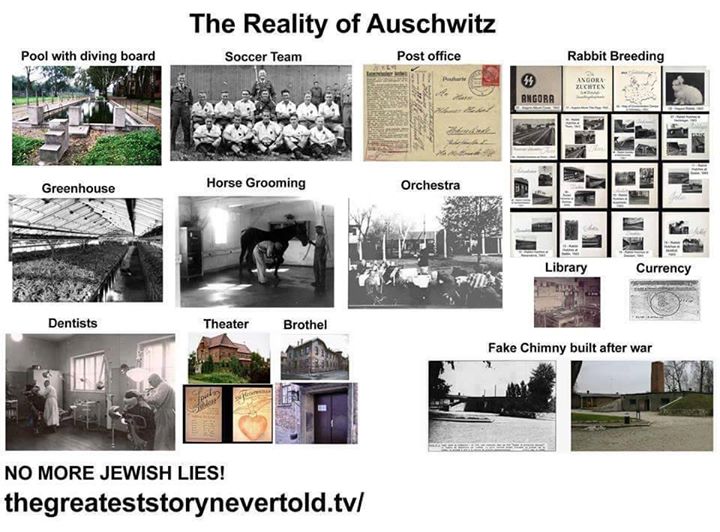
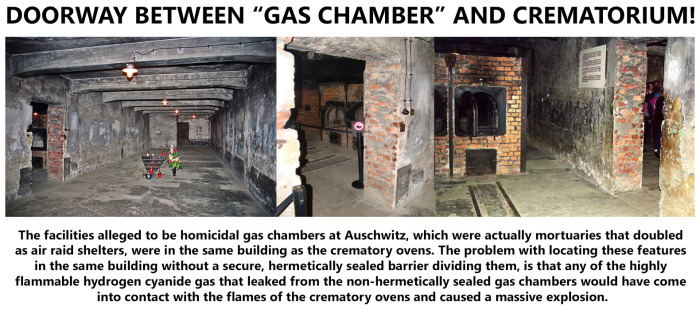
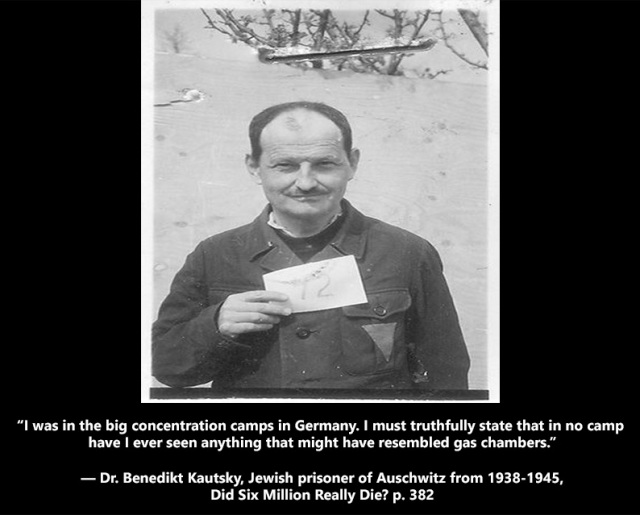
Finally, there is the story about the victims ‘taking showers’ in gas chambers which is the one claimed today. I take issue with this claim for the following reasons.
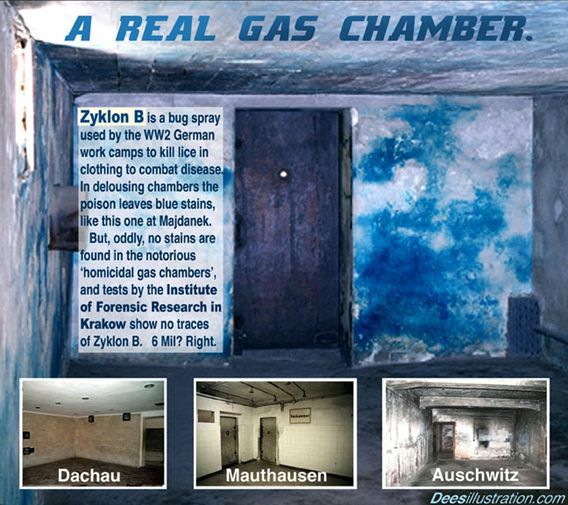
ZYKLON-BZYKLON-B WAS INVENTED in America, not Germany. It was first used in Texas to disinfect the clothing of Mexicans crossing the border.
In the German work camps, Zyklon-B was used to disinfect the clothing of the internees to stem the tide of typhus.
Perhaps you have heard the story that the internees were led into a room in which they were told that they would be given showers and then they were gassed to death.
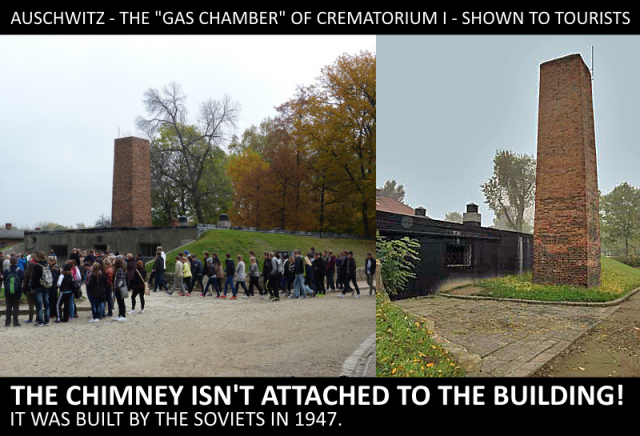
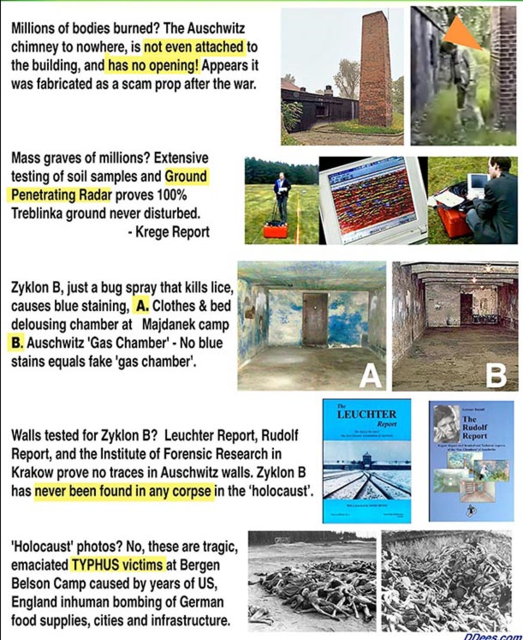
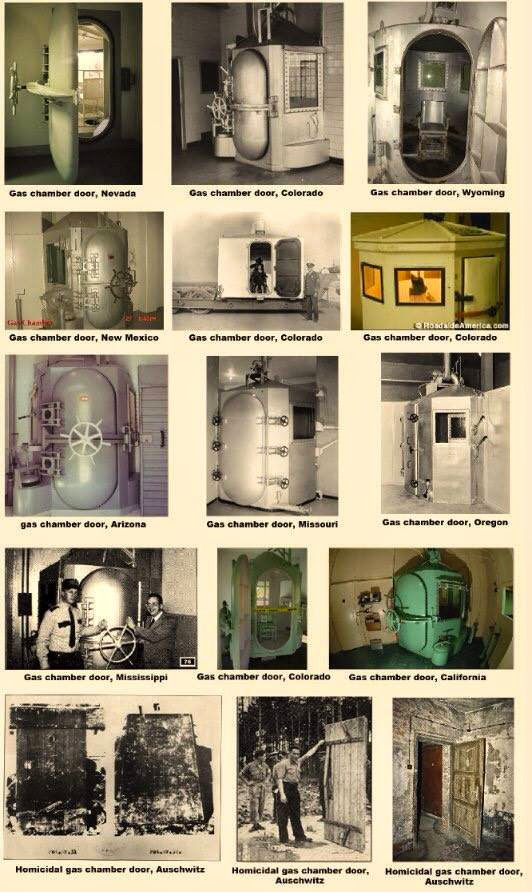
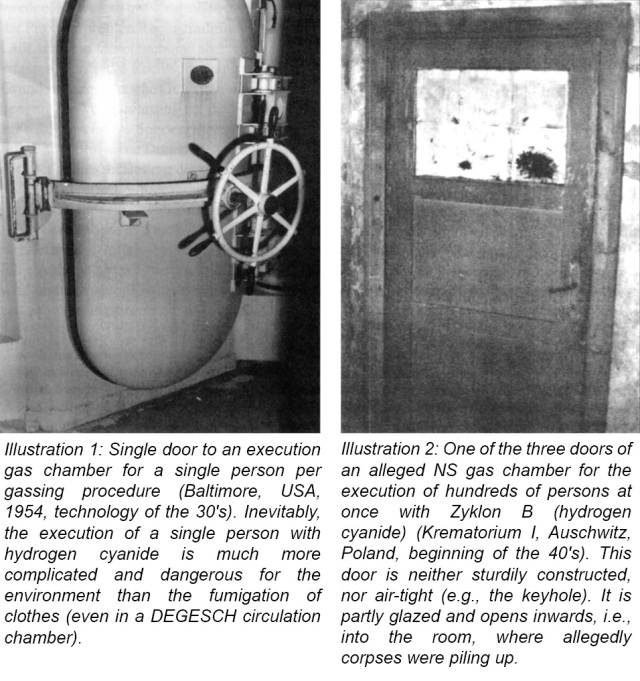
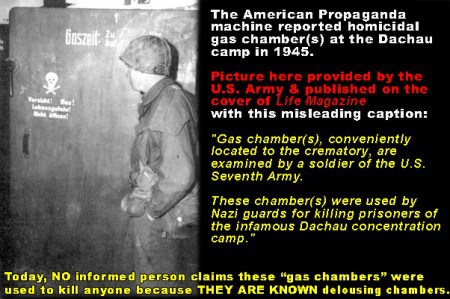
In reality, the doors of a real gas chamber would have to be airtight and look something like an airplane door. Otherwise, the gas would seep out and kill those operating the gas chamber.
In employing a gas chamber for an execution of one person, (as it was once done in America), a method used was to have potassium nuggets dropped into sulfuric acid by a lever. This would result in the production of hydrogen cyanide which would kill the person being executed.
Before the doors of the gas chamber could be opened—post-execution—another gas, anhydrous ammonia, must be injected into the chamber to react with the poisonous gas to make it a less lethal resulting gas.
Even so, anhydrous ammonia being poisonous, it would react with the gas used and would have to be scrubbed away. All of this would have been a long, dangerous, inefficient and toilsome task for the nazis to destroy ‘millions’ using gas chambers.
If Hitler wanted to kill as many Jews as he could, he would have had them shot by machine guns and automatic rifles. This would have been the least expensive and quickest way to commit mass murder. And, tragically, there were many mass murders in World War II by soldiers using machine guns and automatic rifles.
The claim that Hitler committed a genocidal war against Jews is false. I am not defending Hitler. He started a war which caused the deaths of millions.
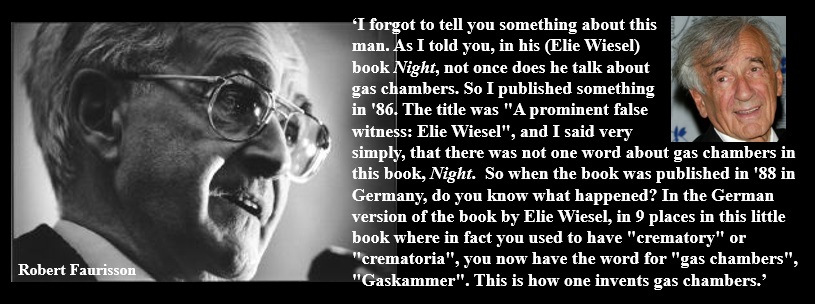
WIESELI FIRST READ Elie Wiesel’s “Night” when in it was an earlier publication.
In this early edition, Wiesel does not mention any gas chambers but states that mass murder was committed by throwing Jews of all ages into great fiery pits.
When I ask various Jews why did Wiesel not mention gas chambers if they existed, and, if great fiery pits were used to kill people, then why are people not talking about the great fiery pits now like people are always talking about the gas chambers?
The usual response is that the victims were killed by both methods and that Wiesel’s failure to mention gas chambers is not proof that the gas chambers for killing people did not exist. This answer is not convincing since Wiesel purports to be giving an eyewitness account.
Weasel (misspelling intentional…for the man is a deceiver and a sneak) wrote about the internees taking showers, being shaved of all body hair, and being covered with disinfectant which would be consistent with a program to prevent typhus and other diseases from killing the internees and not consistent with a program which wanted the internees to die.
In the earlier edition of “Night,” Wiesel wrote that he had surgery on one of his feet at a “well equipped hospital” in Auschwitz before taken to other camps. In the newer editions of “Night” this has been changed to an “infirmary.”
Yet, in both editions, he states that he was given two weeks off from work after his surgery which is inconsistent with the claim that all internees who could not work were killed.
Weasel wrote that while he was recuperating the Russians were approaching Auschwitz and the Germans knew that they could not hold out in Auschwitz any longer.
So, they offered all their internees who were in the hospital that they could decide whether to wait for the Russian soldiers to come or leave with the Germans. Wiesel decided to leave with the Germans who were supposedly committing genocide against the Jews instead of waiting for liberation by the Russians.
Perhaps, you have seen pictures of piles of dead and walking skeletons of a liberated concentration camp.
But, by the end of the war, all Germans were having difficulty feeding themselves.
Also, the American and British air forces were bombing all the railroad tracks making it impossible to bring sufficient quantities of food into the camps. So, America and Britain share most of the blame for the starvation in the camps at the end of the war.
Jews need to keep bringing up the Holocaust so they can extort billions of dollars from America and its most advanced weapons systems for their Zionist program in Israel.
Jews own and control America’s mainline media, so that they can control most everything Americans hear and see.
While Americans argue about what to do about medical care and how much it will cost, Israel has a much more generous medical care program for its citizens and does not need to worry about the costs because it’s paid for by tax-paying American citizens in the aid we give to Israel.
THE END OF THE JEWISH AGE
By Brother Nathanael Kapner, www.realjewnews.com
SOME HAVE CALLED the Twentieth Century, the “American Century,” a term used to describe the United States’ dominance over the rest of the world.
But Jewish historian, Yuri Slezkine, identifies the last hundred years as the “Jewish Century,” his own term by which he describes Jewry’s emergence from the ghetto into the realms of civil activism.
In fact, that is the title of his much-acclaimed (by Jewish reviewers of course) 2009 historical work, “The Jewish Century,” published by Princeton Press.
It is in this range of vision that French Jewish writer Alain Finkielkraut exclaimed in 1998, “How sweet it is to be Jewish at the end of the 20th century! We are no longer History’s accused, but its darlings. The spirit of the times loves, honors, and defends us, it even needs our imprimatur.”
Jews today are the “darlings of democracy” ever since international Jewry destroyed the last vestiges of benevolent Christian Monarchy when they murdered Tsar Nicholas and family in 1918, probably the most beautiful family that ever existed in contemporary history.
And now, with billions of dollars at their command, control of the Central Banks with the Jewish-owned Federal Reserve Bank at the head, and all of Capitol Hill cowering before AIPAC’s thuggish mediocrities during its Week Of National Humiliation, “democracy” has been BOUGHT by organized Jewry, and sadly, the Western world has reaped its poisonous fruit.
WHILE TRACING Jewish migratory patterns throughout the Diaspora in his book, Slezkine brings to light that the many faces of modernity — socialism, capitalism, liberalism — sprang largely from Jewish influence.
Without dispute, the major cultural movements of our day whether it’s Marxism, Bolshevism, Finance Capital, Freudianism, or Post-Christian Sexual Mores, all find their rootsin Jewish activism seeded in Jewry’s “revolutionary” spirit.
But underlying this revolutionary temper lurks a force that is much more sinister, dark, and malevolent, than any movement or revolution could ever effect.
AFFIRMATION OF DEATHWE ARE NOW LIVING in a “Holocaust Remembrance” society.
Touted as the central event of the 20th Century, high school students throughout the Western World will continue to be force-fed with Holocaust dribblings and never once hear of how Jews of the Bolshevik Cheka murdered over 70 million Orthodox Christians.
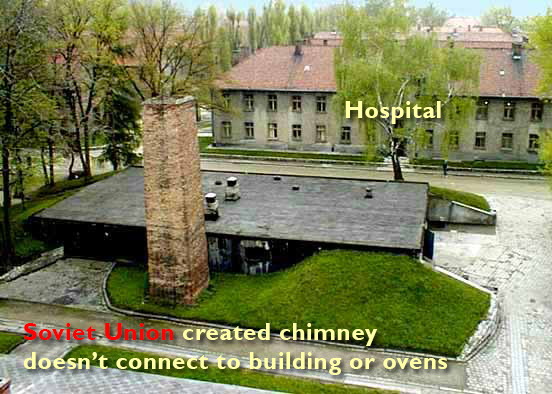
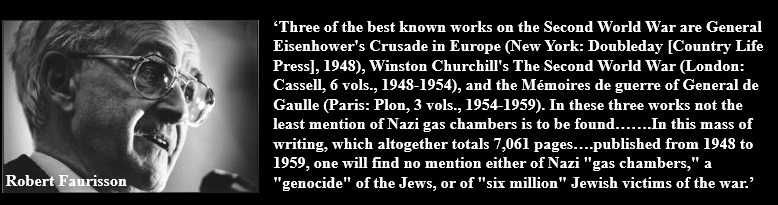
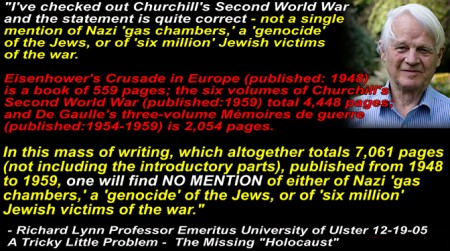
The so-called ‘extermination’ of European Jewry by Hitler’s Third Reich, (Holocaust connoisseurs have yet to provide evidence of gas chambers), has become an image of Western civilization, replacing the West’s symbol of the Resurrection of Christ with the remembrance of dead Jews.
The death of Jews now permeates all of Western cultural consciousness – through movies, television, books, high school courses, museums – and now, “special days,” dedicated to the worship of Jewish corpses where even Westernized Chinese leaders pay adoration and homage.
This Jewish fixation on death vis-a-vis their dead relatives, (every Jew has an ‘aunt’ or ‘uncle’ who was ‘gassed’ at Auschwitz), and subjecting every Gentile to the veneration of such, is nothing less than the spirit of anti-Christ which denies the incarnation of Christ, the life-affirming event of the manifestation of man’s divinization.
ONE MUST WONDER amidst all of this Jewish suffering now honored as sacred, holy, and inviolable, how it is that Jews enjoy greater creature comforts than their fawning Gentiles will ever come close to possessing.
One must also reflect amidst all the pity Jews demand be showered on them that not one ounce of mercy pours forth from their lobbyists for the plight of Palestinians, who, at the hands of Zionist Jewry, have seen their children murdered, their wells poisoned, and their villages and olive groves stolen.
And surely, one must ask amidst the pervasive “Jewification” of Western culture, how long this ‘Jewish Century,’ this ‘Jewish Age of Death,’ can last?
If the symbol of Western Culture is indeed Jewry’s affirmation of death, then like a leaf in the burning heat, their day in the sun will soon wither and crumble away.


.jpg)